 Image 1 of 4
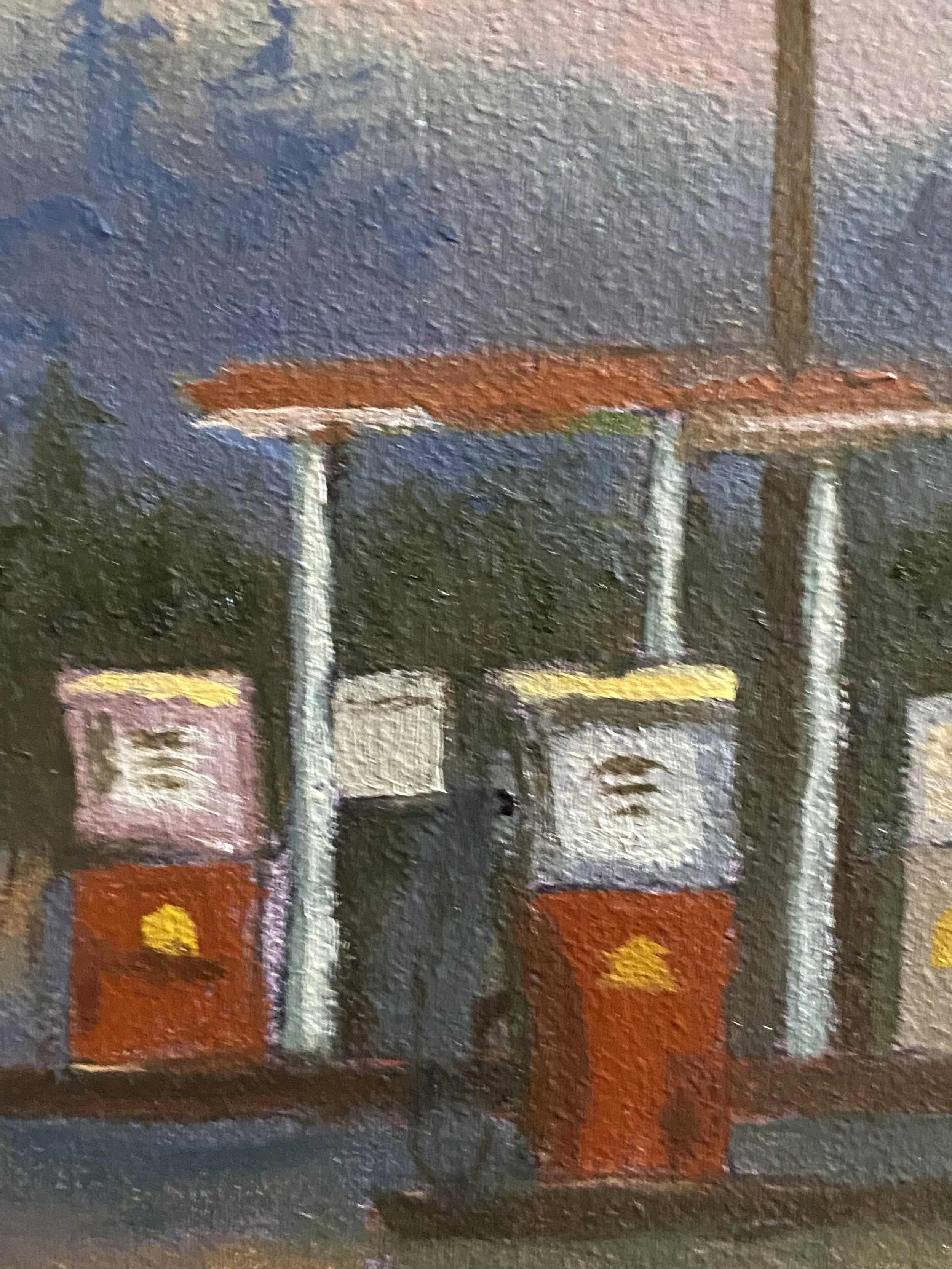 Image 2 of 4
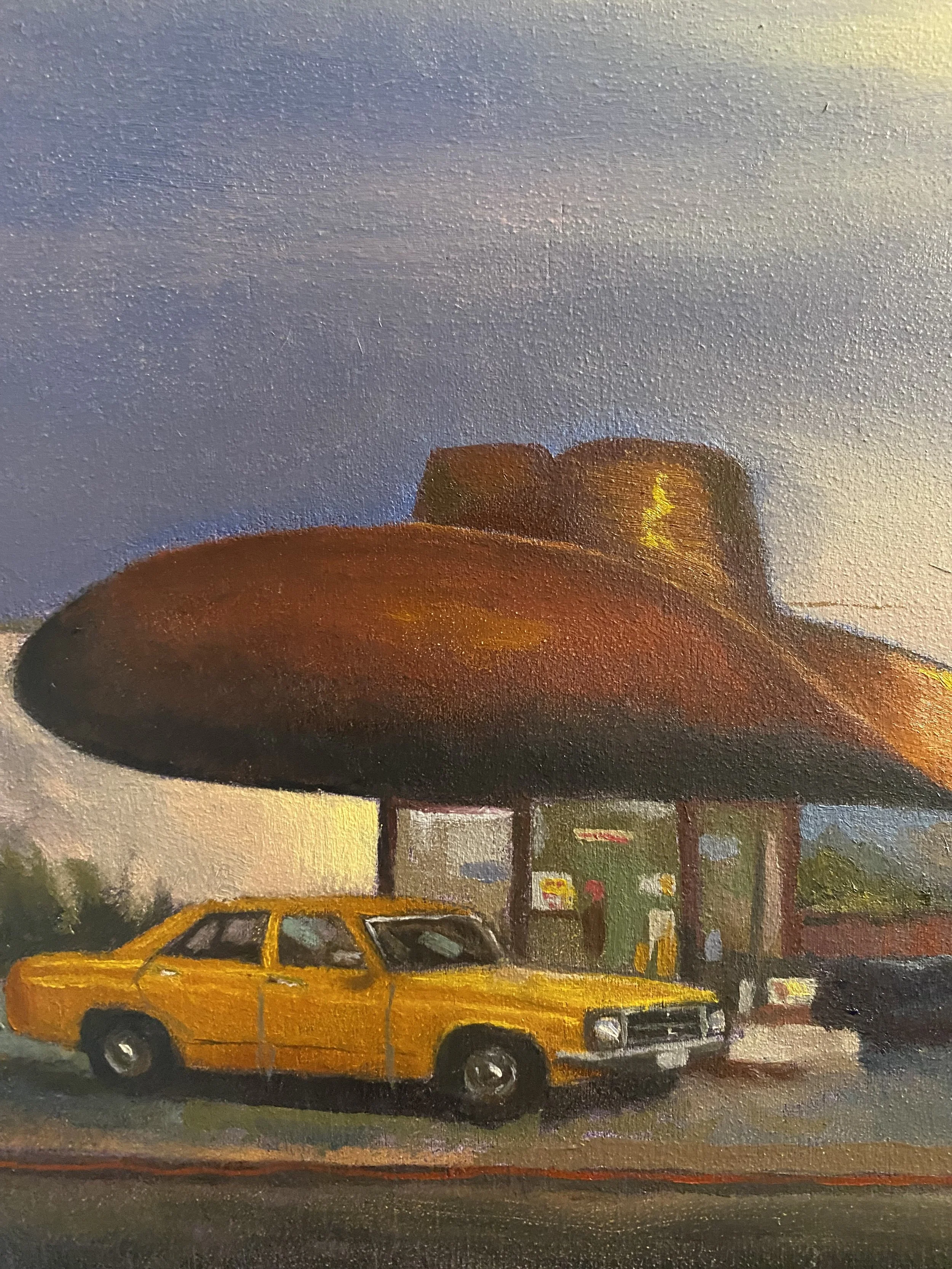 Image 3 of 4
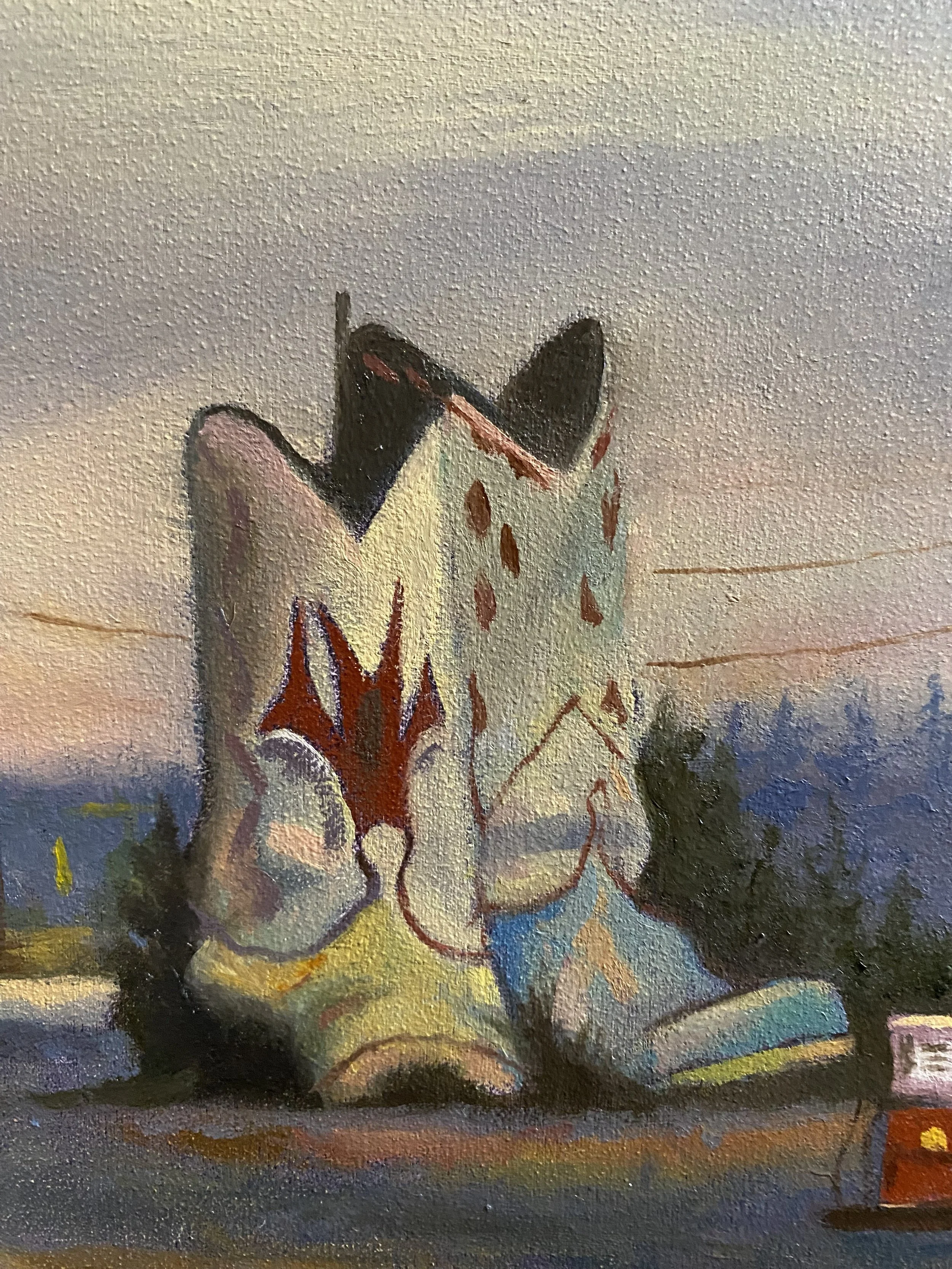 Image 4 of 4
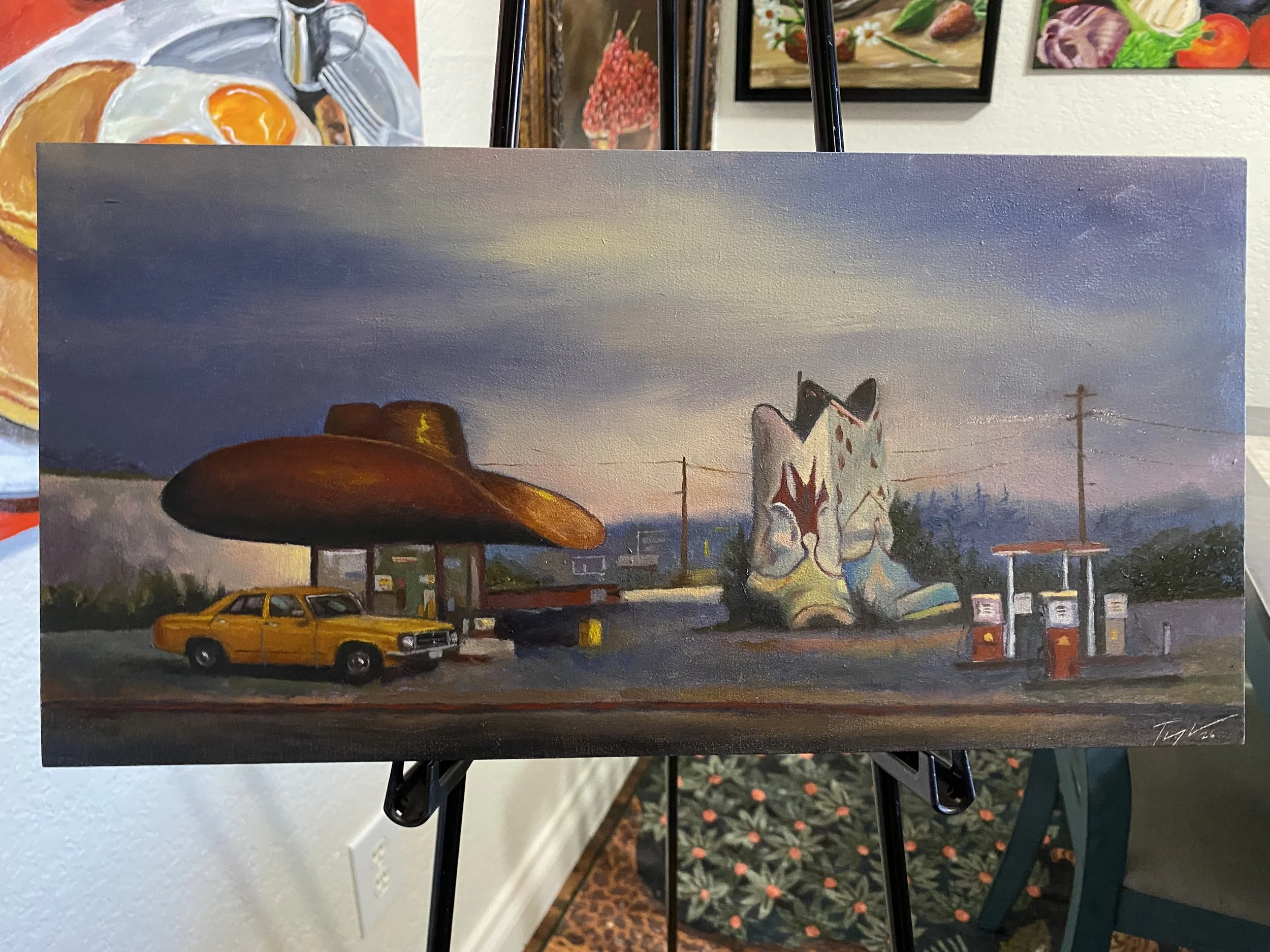
A quiet stretch of roadside Americana, caught somewhere between memory and disappearance. This 16 x 8 inch oil painting captures Seattle’s iconic Hat ‘n’ Boots gas station at dusk—its oversized cowboy hat canopy glowing faintly against a fading sky, while the towering boots stand like relics of a louder, stranger past. A lone yellow car idles in the foreground, grounding the scene in a moment that feels both specific and untethered in time.
Originally built in the mid-1950s along Highway 99 in Seattle’s Georgetown neighborhood, the Hat ‘n’ Boots was designed as a piece of “programmatic architecture”—a gas station shaped to stop drivers in their tracks. The hat served as the station’s office, while the boots housed restrooms, turning a simple fill-up into a roadside attraction. At its peak, it was one of the busiest gas stations in the state, a symbol of postwar optimism and the golden age of American car culture.
But like many roadside landmarks, its relevance faded as Interstate 5 diverted traffic away. By the late 1980s, the station had closed, and the structures fell into disrepair—weathered, vandalized, and nearly lost. Decades later, they were saved and relocated to Oxbow Park, where they remain today as a preserved piece of Seattle history.
This painting leans into that sense of in-between—where nostalgia, decay, and memory blur together. The softened edges, muted light, and restrained palette strip away the spectacle and leave something quieter behind: a monument not just to a place, but to a way of seeing the road, the landscape, and the American West.
Oil on cradled wood panel
16 x 8 inches
Ready to hang
A quiet stretch of roadside Americana, caught somewhere between memory and disappearance. This 16 x 8 inch oil painting captures Seattle’s iconic Hat ‘n’ Boots gas station at dusk—its oversized cowboy hat canopy glowing faintly against a fading sky, while the towering boots stand like relics of a louder, stranger past. A lone yellow car idles in the foreground, grounding the scene in a moment that feels both specific and untethered in time.
Originally built in the mid-1950s along Highway 99 in Seattle’s Georgetown neighborhood, the Hat ‘n’ Boots was designed as a piece of “programmatic architecture”—a gas station shaped to stop drivers in their tracks. The hat served as the station’s office, while the boots housed restrooms, turning a simple fill-up into a roadside attraction. At its peak, it was one of the busiest gas stations in the state, a symbol of postwar optimism and the golden age of American car culture.
But like many roadside landmarks, its relevance faded as Interstate 5 diverted traffic away. By the late 1980s, the station had closed, and the structures fell into disrepair—weathered, vandalized, and nearly lost. Decades later, they were saved and relocated to Oxbow Park, where they remain today as a preserved piece of Seattle history.
This painting leans into that sense of in-between—where nostalgia, decay, and memory blur together. The softened edges, muted light, and restrained palette strip away the spectacle and leave something quieter behind: a monument not just to a place, but to a way of seeing the road, the landscape, and the American West.
Oil on cradled wood panel
16 x 8 inches
Ready to hang